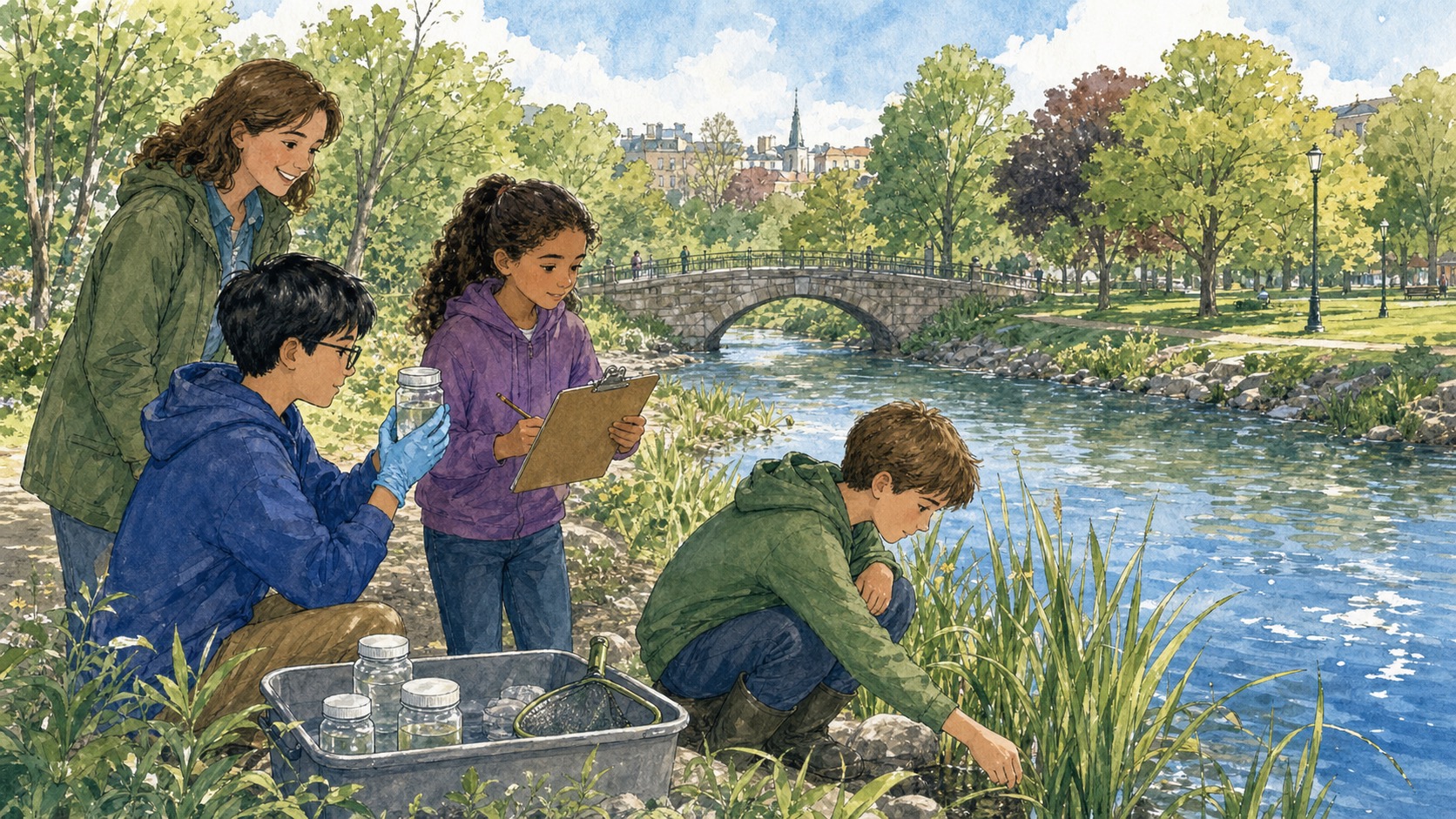
The river河流 /ˈrɪv.ɚ/ behind Millfield Park公园 /pɑːrk/ had been visibly明显地 /ˈvɪz.ɪ.bli/ worse for two years. The water was cloudy浑浊的 /ˈklaʊ.di/, the reeds芦苇 /riːdz/ had turned brown枯黄 /braʊn/, and local residents居民 /ˈrez.ɪ.dənts/ had stopped seeing the usual species物种 /ˈspiː.ʃiːz/ of birds and fish. When Jack's school environment环境 /ɪnˈvaɪ.rən.mənt/ group decided to investigate调查 /ɪnˈves.tɪ.ɡeɪt/ the problem, Jack volunteered自愿 /ˌvɑːl.ənˈtɪrd/ to write the report and conduct开展;进行 /kənˈdʌkt/ the survey调查 /ˈsɜːr.veɪ/.
He contacted联系 /ˈkɑːn.tæk.tɪd/ Dr Kim, a researcher研究员 /rɪˈsɜːr.tʃɚ/ from a local environmental环境的 /ɪnˌvaɪ.rənˈmen.t̬əl/ organization机构 /ˌɔːr.ɡən.ɪˈzeɪ.ʃən/ called GreenWatch. She met Jack at the riverbank河岸 /ˈrɪv.ɚ.bæŋk/ on Saturday morning with a bag of装有……的一袋 test检测 /test/ equipment设备 /ɪˈkwɪp.mənt/. She collected采集 /kəˈlek.tɪd/ samples样本 /ˈsæm.pəlz/ from three different points, writing detailed详细的 /ˈdiː.teɪld/ notes as she went.
"What evidence证据 /ˈev.ɪ.dəns/ are you looking for?" " Chemical化学的 /ˈkem.ɪ.kəl/ levels, primarily主要地 /praɪˈmer.ɪ.li/. When you observe观察 /əbˈzɜːrv/ a river河流 /ˈrɪv.ɚ/ like this, you must identify确认 /aɪˈden.tɪ.faɪ/ which factor因素 /ˈfæk.tɚ/ is causing the pollution污染 /pəˈluː.ʃən/ before you can recommend推荐 /ˌrek.əˈmend/ a solution解决方案 /səˈluː.ʃən/. It could be industrial工业的 /ɪnˈdʌs.tri.əl/ runoff径流 /ˈrʌn.ɑːf/, crop农作物 /krɑːp/ chemicals from the fields upstream上游 /ˌʌpˈstriːm/, or the effects of climate气候 /ˈklaɪ.mɪt/ change on water temperature温度 /ˈtem.prɪ.tʃɚ/."
"Is this a global全球性的 /ˈɡloʊ.bəl/ problem or a local one?" "Both. Every river河流 /ˈrɪv.ɚ/ is part部分 /pɑːrt/ of a region地区 /ˈriː.dʒən/ — and every region地区 /ˈriː.dʒən/ is part部分 /pɑːrt/ of the planet地球 /ˈplæn.ɪt/. When you damage破坏 /ˈdæm.ɪdʒ/ one river河流 /ˈrɪv.ɚ/, you damage破坏 /ˈdæm.ɪdʒ/ the survival生存 /sɚˈvaɪ.vəl/ of every creature生物 /ˈkriː.tʃɚ/ that depends on it — from insects昆虫 /ˈɪn.sekts/ to birds to the people who fish here."
Jack looked at a plastic塑料 /ˈplæs.tɪk/ bottle caught in the reeds芦苇 /riːdz/. "What resources资源 /rɪˈsɔːr.sɪz/ do you have to fix this?" "Honestly诚实地 /ˈɑːn.ɪst.li/ — not enough足够 /ɪˈnʌf/. We contribute贡献 /kənˈtrɪb.juːt/ what we can: we publish evidence证据 /ˈev.ɪ.dəns/, push for reform改革 /rɪˈfɔːrm/, and work with other scientists科学家 /ˈsaɪ.ən.tɪsts/. But real change also needs residents and students. When you do a survey调查报告 /ˈsɜːr.veɪ/ like this and share what you find — that's how the species物种 /ˈspiː.ʃiːz/ in this river河流 /ˈrɪv.ɚ/ survive存活 /sɚˈvaɪv/."
Before leaving, Dr. Kim explained that a river河流 /ˈrɪv.ɚ/ is a complete ecosystem生态系统 /ˈiː.koʊˌsɪs.təm/. Low oxygen氧气 /ˈɑːk.sɪ.dʒən/, harmful bacteria细菌 /bækˈtɪr.i.ə/, or toxic有毒的 /ˈtɑːk.sɪk/ sediment沉积物 /ˈsed.ə.mənt/ could damage破坏 /ˈdæm.ɪdʒ/ it. Her laboratory实验室 /ˈlæb.rə.tɔːr.i/ would test检测 /test/ for contamination污染 /kənˌtæm.əˈneɪ.ʃən/ and trace any illegal discharge排放 /ˈdɪs.tʃɑːrdʒ/. Meanwhile, the group would monitor监测 /ˈmɑː.nə.t̬ɚ/ water quality, ask the local authority主管部门 /əˈθɔːr.ə.t̬i/ for stronger regulation监管 /ˌreɡ.jəˈleɪ.ʃən/, and seek funding资金 /ˈfʌn.dɪŋ/ for conservation保护 /ˌkɑːn.sɚˈveɪ.ʃən/. Jack finally understood how fragile脆弱的 /ˈfrædʒ.əl/ nature could be—and why every scientific indicator指标 /ˈɪn.də.keɪ.t̬ɚ/ mattered很重要 /ˈmæt̬.ɚd/.
Jack walked home along the bank, watching望着 /ˈwɑː.tʃɪŋ/ the surface of the water. He passed a patch一片 /pætʃ/ of wild seeds种子 /siːdz/ growing at the water's edge — a small wave波 /weɪv/ of green in an otherwise grey灰色的 /ɡreɪ/ landscape景色 /ˈlænd.skeɪp/. The forest森林 /ˈfɔːr.ɪst/ on the far bank was still dense茂密的 /dens/ and alive. Not everything had been lost. He wrote in his notebook笔记本 /ˈnoʊt.bʊk/: The river河流 /ˈrɪv.ɚ/ is a threat威胁 /θret/ and a resource资源 /rɪˈsɔːrs/ at the same time — it depends on what you do next.